 Selangor(Headquater)




5 Essential Factors of Warehouse Racking for Sustainable Logistics Operations
11 March 2026
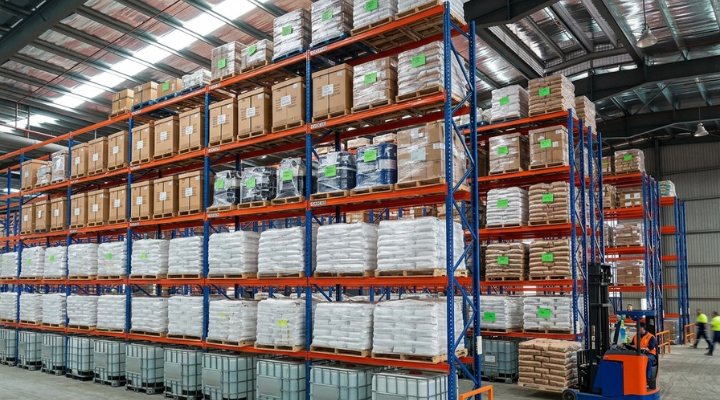
5 Essential Factors of Warehouse Racking for Sustainable Logistics Operation
In the fast-paced world of logistics warehouse management, efficiency isn't just a goal—it’s a necessity for survival. As global supply chains become more complex, the backbone of any high-performing facility lies in its structural organization. This is where strategic warehouse racking for logistics plays a transformative role. Beyond merely holding pallets, a well-engineered racking system acts as the engine of your facility, dictating how fast goods move, how safely your team operates, and how effectively you utilize every cubic meter of expensive industrial space
1. Analyzing the Cost Components of Logistics Racking Systems
Investing in a logistics warehouse setup requires a clear understanding of where your capital is going. Many project managers focus solely on the price of steel, yet a sustainable warehouse racking investment involves multiple layers of financial planning
1.1 Breaking Down the Initial Investment: Material and Structural Costs
The primary cost driver is the grade of material and the type of configuration chosen. For instance, selective racking offers lower entry costs but requires more floor space, whereas high-density systems like Drive-In or Shuttle racking involve higher upfront costs but significantly lower the cost per pallet position in the long run. Structural integrity depends on the steel gauge and the powder coating quality, which ensures the racking survives the humid Malaysian climate
1.2 Identifying Hidden Costs in Racking Installation and Maintenance
A common pitfall in budgeting for warehouse racking for logistics is overlooking "soft costs." This includes professional installation by certified teams, periodic safety inspections, and potential floor reinforcement. Ignoring these can lead to operational bottlenecks or costly retrofitting in the future.
2. Selecting the Most Suitable Racking Solutions for Logistics Providers
Not all warehouse racking is created equal. The "best" system is the one that aligns with your SKU velocity and inventory turnover rates
2.1 High-Density vs. High-Accessibility Racking Configurations
In the logistics industry, you must choose between density (storing more in less space) and accessibility (getting to any pallet at any time). Selective Racking provides 100% accessibility, making it ideal for 3PL providers with diverse clients. Conversely, Double Deep or Drive-In systems are better for bulk storage of identical SKUs, though they require specialized reach trucks.
2.2 Why Selective Racking Systems are Dominating the Logistics Sector
Despite the rise of automation, Selective Racking remains the preferred warehouse racking for logistics due to its versatility. It requires no specialized forklifts and can be easily reconfigured as your logistics business grows, providing the scalability needed in the Malaysian market.
3. Optimizing Warehouse Layout for Efficient Goods Flow
A logistics warehouse is only as good as its flow. A poor layout leads to "bottlenecks" where forklifts cross paths unnecessarily, increasing the risk of accidents and slowing down fulfillment
3.1 Strategic Planning to Improve Storage Density and Accessibility
When planning your warehouse racking layout, you must consider the "Golden Zone"—placing high-velocity goods at chest height and near the loading bays. Effective layout planning involves calculating the optimal aisle width, ensuring it is narrow enough to save space but wide enough for safe forklift maneuvering
3.2 Standardizing Pallet Variations for Seamless Racking Compatibility
One often overlooked aspect of warehouse racking for logistics is pallet standardization. Whether you use ISO pallets (1200x1000mm) or Malaysian standard pallets, the beam levels and upright depths must be calibrated precisely. Misalignment here can lead to uneven load distribution and structural stress.
4. Safety Compliance and Bomba Certification for Industrial Racking
In Malaysia, safety isn't just a preference; it’s a legal requirement. Ensuring your warehouse racking meets the standards set by DOSH (JKKP) and Bomba is critical for operational continuity.
4.1 Common Safety Risks in High-Traffic Logistics Hubs
High-traffic logistics warehouses are prone to forklift impacts. Even a minor dent in a racking upright can reduce its load-bearing capacity by up to 40%. Without proper column guards and rack end protectors, the risk of a progressive collapse increases significantly.
4.2 Preventive Methods to Ensure Long-Term Structural Integrity
To secure Bomba certification, your racking layout must comply with the rules and regulations. This includes maintaining a minimum 500mm clearance between the top of the cargo and the fire sprinkler heads. Regular rack auditing and the installation of safety mesh or back-stop beams are essential methods to minimize high-risk events.
5. The Future of Warehousing: Automation and Digital Integration
The logistics industry in Malaysia is rapidly moving toward Industry 4.0. The integration of technology into warehouse racking is no longer a luxury but a standard for high-volume distributors. By eliminating human error and forklift traffic within the rack, optimizing labor utilization, and providing seamless WMS integration, the shuttle system serves as a scalable, reliable, and intelligent asset for
5.1 Enhancing Accuracy through Warehouse Management System (WMS)
Modern warehouse racking for logistics is often paired with WMS software using barcodes or RFID. This allows for real-time tracking of every pallet position, reducing human error and ensuring that the "First-In, First-Out" (FIFO) principle is strictly followed.
5.2 Transitioning to 4-Way Pallet Shuttle Systems for Efficiency
For those looking to future-proof their logistics warehouse, the transition to 4-Way Pallet Shuttle systems represents the pinnacle of storage density. These automated shuttles travel within the racking structure, eliminating the need for forklift aisles entirely and allowing for a massive increase in storage capacity within the same footprint
Conclusion
Building a high-performance logistics warehouse requires more than just buying steel frames. It demands a holistic approach to warehouse racking—from cost analysis and layout optimization to strict safety compliance. By focusing on these five essential factors, you ensure that your logistics operation remains resilient, scalable, and profitable for years to come.